- Meta Muse surpasses five million downloads in 22 days in the United States and adds millions of weekly users.
- The agent searches for products and prepares purchases, but Meta ensures that the user reviews and approves before finalizing.
- Amazon blocks access while Shopify and Stripe integrate, and concerns grow about privacy, permissions, and data training.
- The launch boosts Meta's stock and intensifies competition between OpenAI, Apple, Google, and Anthropic.
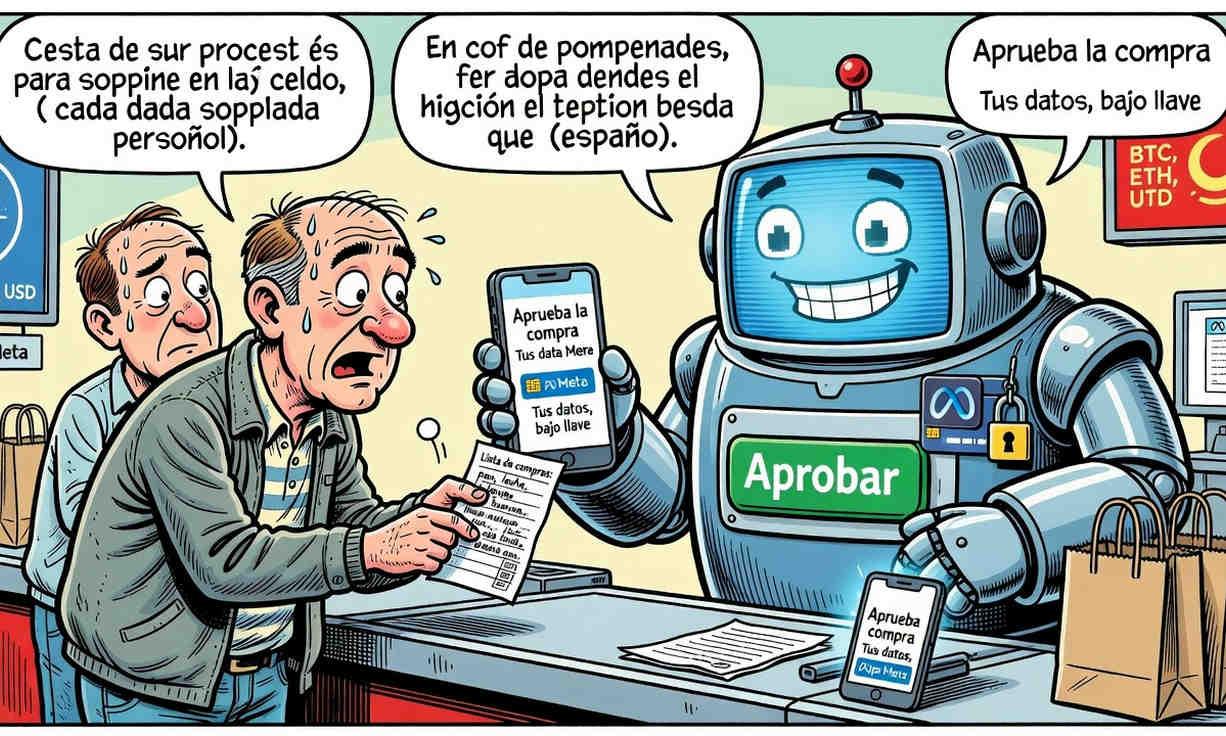
Meta has launched Muse, an AI personal assistant that originated in the United States and Canada and has been met with remarkable success. The company estimates that it surpassed five million downloads in just 22 days , a speed that far exceeds that of ChatGPT, Grok, and Claude in the same initial period. The product doesn't just answer questions: it searches for items, compares options, and prepares purchase requests.
Behind the enthusiasm, cracks are appearing. Amazon has blocked Muse's access to its platform , while Meta is trying to expand partnerships with merchants and payment services. The debate is no longer just technical: it touches on permissions, personal data, personalized pricing, and who controls the relationship between the buyer and the store.

A dazzling start to the agents' careers

Muse was launched on September 8, 2026. According to Sensor Tower data reported by various media outlets, the agent reached five million downloads in the United States in 22 days . To put this in context, ChatGPT took 56 days to reach that number, Grok 103, and Claude 492, according to the same estimates.
It's not all about downloads. Usage data cited by The Information indicates that more than three million people send at least one request per week , more than one million do so daily, and the number of users who interact with Muse in some way throughout the week exceeds four million.
The growth is partly explained by Meta's advertising machine. Between September 14 and 27, Muse accounted for up to half of the company's own ad impressions on Facebook, Instagram, and WhatsApp to integrate AI agents . On September 16, when Meta increased its spending, daily downloads rose by 73% . In the week ending September 27, Muse broke into the top fifteen brands with the most ad impressions in the United States.

What does Muse do and where does it fit into the music industry?

Muse presents itself as an assistant capable of performing tasks autonomously. It can compose emails, organize the inbox, book trips, or fill out forms , and it runs on the Muse Spark family of models within a virtual machine that allows it to continue operations in the background. In the realm of shopping, it searches for products on retail websites and displays options to the user.
Meta maintains that the buyer has the final say. If the user chooses to pay with Muse, the agent prepares the order and displays the details for review and approval before finalizing the transaction, according to the company. In some cases, Muse may request access to the user's email address, full name, and address to complete the process.
The payment infrastructure relies on familiar services. Muse can connect with Stripe's Link and Shopify's Shop Pay , although users must first link one of these options. The Shopify integration has also helped drive the use of agent checkout in online stores, while Meta has expanded its offering for small businesses with AI as its enterprise operating layer.

Amazon closes the door and the pulse shifts to the platforms

The strongest reaction came from Amazon. The company blocked Muse's access to its platform, arguing that the agent bypassed personalization, captured customer credentials, and scraped account data , according to CNBC. Amazon maintains that third-party applications that make purchases on behalf of users should operate openly and respect each provider's decisions.
The clash isn't just technical. If Muse can complete purchases without the user ever having to go to Amazon , the platform loses traffic, data, and commissions. Faced with this potential closure, Shopify has opted to integrate with Meta to enable agent payments in its stores, which illustrates two opposing strategies: partnering with agents or erecting barriers to stop them.
Permissions, privacy, and data training

During initial setup, Muse requests access to Gmail, calendar, and, on Macs, the entire operating system. Meta uses interactions with Muse by default to train its AI models , although this option can be disabled in the settings. The difference between accessing data to perform a task and using it to train models is key in the privacy debate.
Surfshark's analysis places Muse among the apps that declare the most data categories, with 31 types, compared to an average of 13 across all apps. Precise location and sensitive information appear in the listings for both Muse and Meta AI , according to the report, although the presence of a category does not imply that all specific data is collected on every occasion. The cybersecurity company also emphasizes that training is enabled by default and that the user must manually disable it.

Meanwhile, security expert Patrick Wardle identified a critical vulnerability in the application shortly after its launch. Meta patched it immediately , according to several media outlets, and the company has maintained that Muse was designed with privacy and security as top priorities. Even so, the incident raises concerns about the permissions agents need to move between services.
Stock market, competition and the dispute over the interface

The market has interpreted the launch as a significant move. Meta's stock rose more than 11% in the days following the unveiling of Muse , and Wells Fargo raised its price target to $796, according to CNBC. Several analysts believe Muse positions Meta strongly in the new personal agent economy, although user retention remains to be seen.
Competition has intensified in a very short time. Between September 8 and October 2, 2026, OpenAI, Meta, Apple, Google, and Anthropic all made moves with new agents or programs for personal agents , according to Yahoo Finance. The market is becoming divided between paid subscriptions, free models with limitations, and hardware-integrated packages, shifting the battle from the language model to the interface and ecosystem.
For Meta, the challenge doesn't end with downloads. The company faces constant scrutiny for its data and security record , and has resolved cases related to minors and data protection. Muse's success will depend on users being willing to share their data, trusting recommendations, and maintaining the ability to review each decision before paying.
Muse has made a powerful impact on the minds of consumers: millions of downloads, an unprecedented campaign on Meta, and a promise of simpler shopping. The battle with Amazon, concerns about permissions, and the use of data to train models mark the next chapter. The real test won't be how many people install it, but how many continue to trust it once the novelty wears off and the platforms vie for customer control.
